
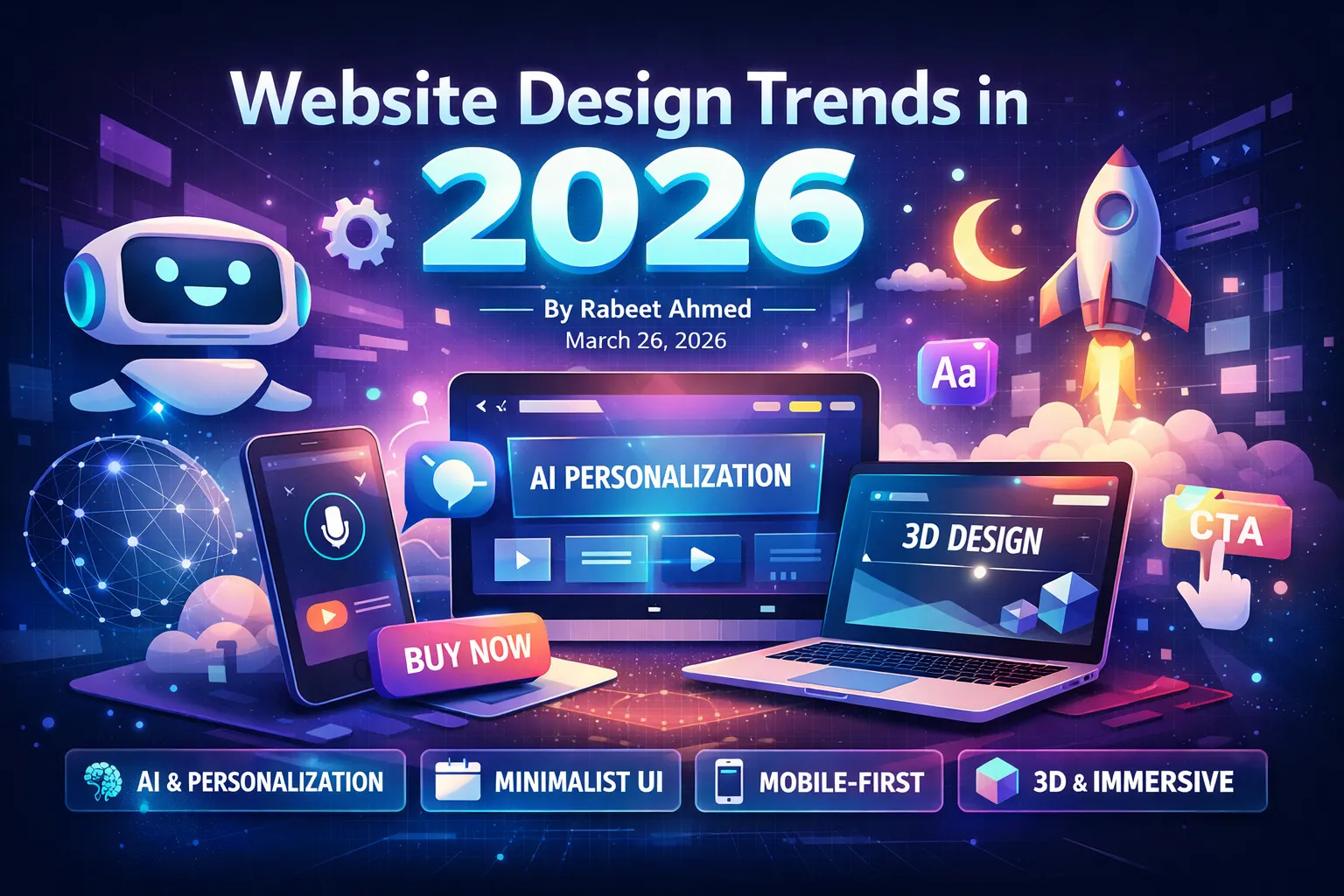
In today’s fast-paced digital world, your website is more than just an online presence—it’s your brand’s first impression, sales engine, and credibility builder. As we move through 2026, website design trends are evolving rapidly, driven by user behavior, AI advancements, and performance expectations.
If you want your business to stay competitive, here are the top website design trends in 2026 you need to implement.
1. AI-Powered Personalization
Modern websites are no longer static. AI is transforming how users interact with websites by delivering personalized experiences.
From dynamic content recommendations to intelligent chatbots, websites now adapt based on user behavior, location, and preferences.
Why it matters:
- Increases engagement and conversions
- Creates a tailored user journey
- Improves customer satisfaction
2. Minimalist & Clean UI (Less is More)
Cluttered designs are officially outdated. In 2026, simplicity wins.
Websites now focus on:
- Clean layouts
- Clear typography
- Spacious design (whitespace)
Key takeaway:
A simple design helps users focus on what really matters—your content and call-to-action.
3. Micro-Interactions & Smooth Animations
Subtle animations and micro-interactions are becoming essential for modern UX.
Examples include:
- Hover effects
- Button animations
- Scroll-triggered transitions
These small details create a premium, interactive feel without overwhelming the user.
4. Dark Mode & Adaptive Themes
Dark mode is no longer optional—it’s expected.
Modern websites now offer:
- Light/Dark toggle
- System-based theme detection
Benefits:
- Better user comfort
- Modern aesthetic
- Reduced eye strain
5. Mobile-First & Speed Optimization
With the majority of users browsing on mobile devices, mobile-first design is critical.
Key elements include:
- Fast loading speed (Core Web Vitals optimized)
- Responsive layouts
- Lightweight assets (WebP images, optimized scripts)
Pro tip:
A slow website = lost customers.
6. Bold Typography & Visual Storytelling
Typography is now a major design element, not just text.
Trends include:
- Large, bold headings
- Creative font combinations
- Story-driven layouts
This helps brands communicate their message instantly and effectively.
7. 3D Elements & Immersive Design
Websites are becoming more interactive with:
- 3D visuals
- Parallax scrolling
- Depth-based layouts
These elements create a high-end, modern feel that grabs attention.
8. Voice Search & Accessibility
Accessibility is no longer optional—it’s essential.
Modern websites now focus on:
- Voice search optimization
- Screen-reader compatibility
- Better contrast and readability
This ensures your website is usable for everyone.
9. Conversion-Focused Design
Design is no longer just about looks—it’s about results.
High-performing websites include:
- Strong CTAs (Call-to-Action)
- Clear user flow
- Strategic layout placement
Every section is designed to guide users toward taking action.
10. No-Code & Low-Code Integration
Tools like Webflow, WordPress, and AI builders are making development faster and more efficient.
Businesses now benefit from:
- Faster deployment
- Easy updates
- Lower development costs
Final Thoughts
Website design in 2026 is all about user experience, speed, and personalization. A modern website isn’t just visually appealing—it’s smart, fast, and conversion-driven.
If your website isn’t aligned with these trends, you’re likely losing potential customers every day.
Need a Modern Website?
If you’re looking to upgrade your website with the latest design trends, we can help you build a high-performance, conversion-focused website tailored to your business goals.